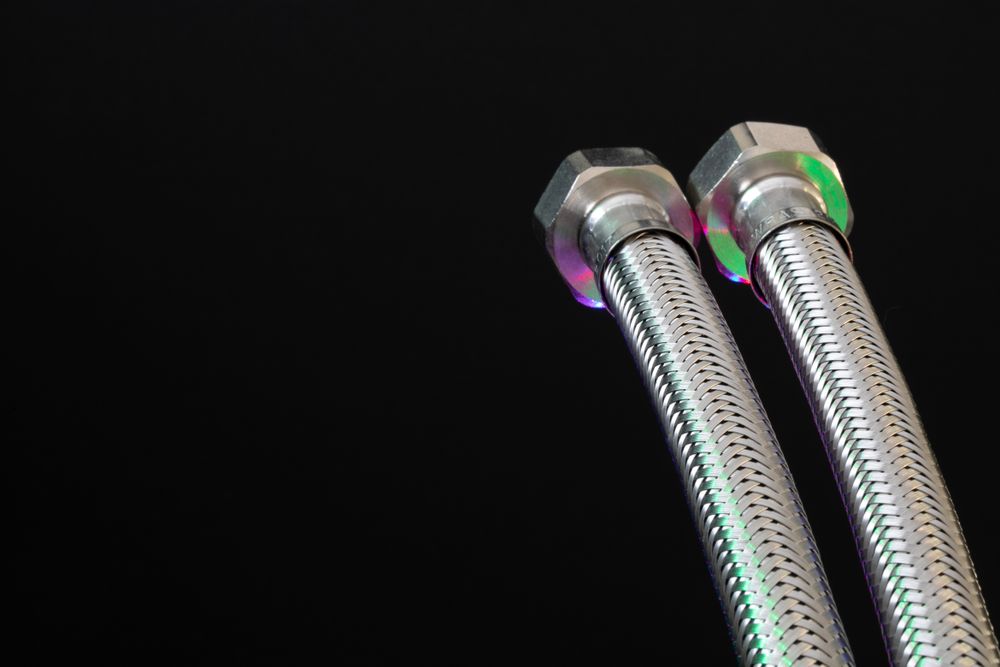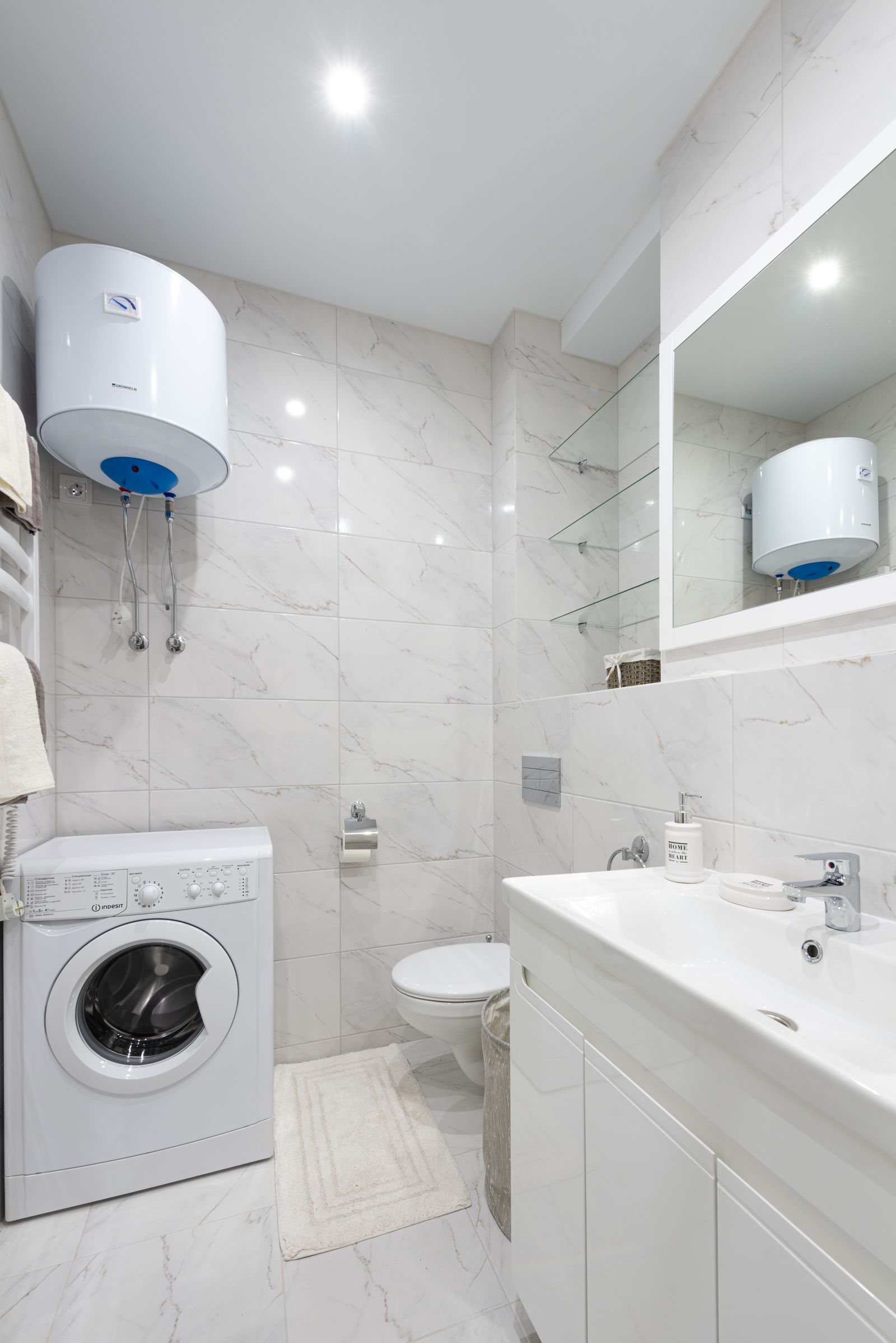
A tankless unit is a compact box, usually mounted on a wall, that heats water only when a tap is open. There is no tank to fill and no stored supply to run through. For some homes that is a good match, and for others a tank is still the simpler and more sensible choice.
That is why a call about tankless water heater installation starts with questions about your home, not a sales pitch. The pro asks what you have now, how many people use hot water at once and where a unit could go, then explains the options and the upfront price before any work begins.
How a tankless water heater in Brea works
When you open a hot tap, cold water flows into the unit and a sensor notices the flow. On a gas model a burner lights, and on an electric model heating elements switch on. The water passes through a heat exchanger, comes out hot, and the unit shuts off again when you close the tap.
Because the unit heats water only on demand, the limit is flow, not tank size. A model can heat a certain amount of water at one time, so a household that runs two showers and the dishwasher together asks for more than one that uses a single tap.
Is tankless a good fit for this home? Gas line, venting, power and flow
Four things decide it. The first is the fuel supply. A gas unit can need a larger gas line than a tank heater, and our page on the gas water heater explains how gas controls and venting work. The second is venting, since gas tankless units use a vent made for the unit. The third is power, because even gas models need an outlet for their controls. The fourth is flow, meaning the household's real hot water use.
A pro checks all four before recommending a unit. They will also tell you honestly if a tank heater suits your home better, so ask for both options. Many newer east-side homes already have tankless units, and older tract homes with the heater in the garage can often make the switch with some planning.
Tank to tankless conversion: what changes
A conversion is more than swapping one heater for another. The old tank comes out, and the plumbing, venting and gas or power supply are adjusted for the new unit.
- Location. A tankless unit is mounted on a wall, so it often takes less floor space than a tank.
- Venting. A gas unit needs a vent made for it, which may differ from the flue on the old tank.
- Gas supply. The gas line may need to be larger than the one that served the tank.
- Water lines. Connections are reworked, and many units have their own drain and condensate lines.
- Finishing. The old drain pan, straps and the space around the old tank are dealt with.
Ask the pro to walk you through each item for your home. How long it takes depends on all of them, so request a realistic window when you book.
Thinking about converting?
Tell a person what you have now and where it sits.
Get a straight answer by phoneTankless water heater repair: error codes, scale and ignition issues
When a tankless unit has a problem, the display often shows an error code. Codes usually point toward ignition, a sensor, venting, flow or scale. The code and the model number let a pro narrow it down on the phone before they arrive.
Common calls include a unit that will not light, hot water that turns cold in the middle of a shower, water that never gets fully hot, and a unit that shuts itself off. If the unit is dripping or water is pooling near it, that is a leak, and our page on a leaking water heater covers the safe steps first. If there is no hot water at all, our no hot water page lists the likely causes.
This is not a do-it-yourself repair. The covers hold gas and electrical parts, so write down the code and the model and leave the rest to the pro.
Descaling and yearly care on hard water
Water in Brea is generally hard, and hard water leaves scale inside a tankless unit's heat exchanger. Scale can slow the flow, cause error codes and make the unit work harder. A pro descales the unit by flushing it with a cleaning solution, and checks the inlet filter, sensors and venting during the same visit.
How often that is needed depends on the model and on how much hot water your household uses. Ask the pro to set a schedule that fits your home.
Tank vs tankless: an honest comparison
Neither type is better for every home. This table shows how they differ in practice.
| Tank | Tankless | |
|---|---|---|
| How it heats | Heats and stores a full tank of water | Heats water only when a tap opens |
| When hot water runs out | When the stored supply is used up and the tank is reheating | When the flow asked for is more than the unit can heat at once |
| What the home needs | Floor space, a vent on gas models, a drain pan | Wall space, a suitable gas or power supply, venting made for the unit |
| Where it goes | Garage, closet, basement or attic | On a wall, indoors or outdoors depending on the model |
| Upkeep | Flushing sediment, anode rod, valves | Descaling, filter cleaning, venting and sensor checks |
| Common repairs | Thermostats, elements, gas controls, valves, leaks | Igniters, sensors, flow problems, scale, error codes |
Tankless water heater in Brea homes: what the era changes
In Country Hills, mid-1970s hillside homes usually have a tank heater in the garage. Those are the homes most often asked about conversions, and the garage wall can be a good spot for a unit. Our notes on water heater repair in Country Hills cover what the pro checks on a home like that.
In Blackstone and the other east-side master-planned neighborhoods built in the 2000s and 2010s, tankless units are common, so the calls are more often about repair and descaling than installation. See water heater repair in Blackstone.
Whatever the era, the same hard water applies, which is why upkeep matters on a tankless unit. For help with a tank heater instead, start at our the Brea home page page.